
Rinse after every trip
A five-minute fresh-water rinse removes salt, sand, and fish slime before they grind into the weave. Pay attention to seams, zipper tracks, and where the cover contacts rub rails.
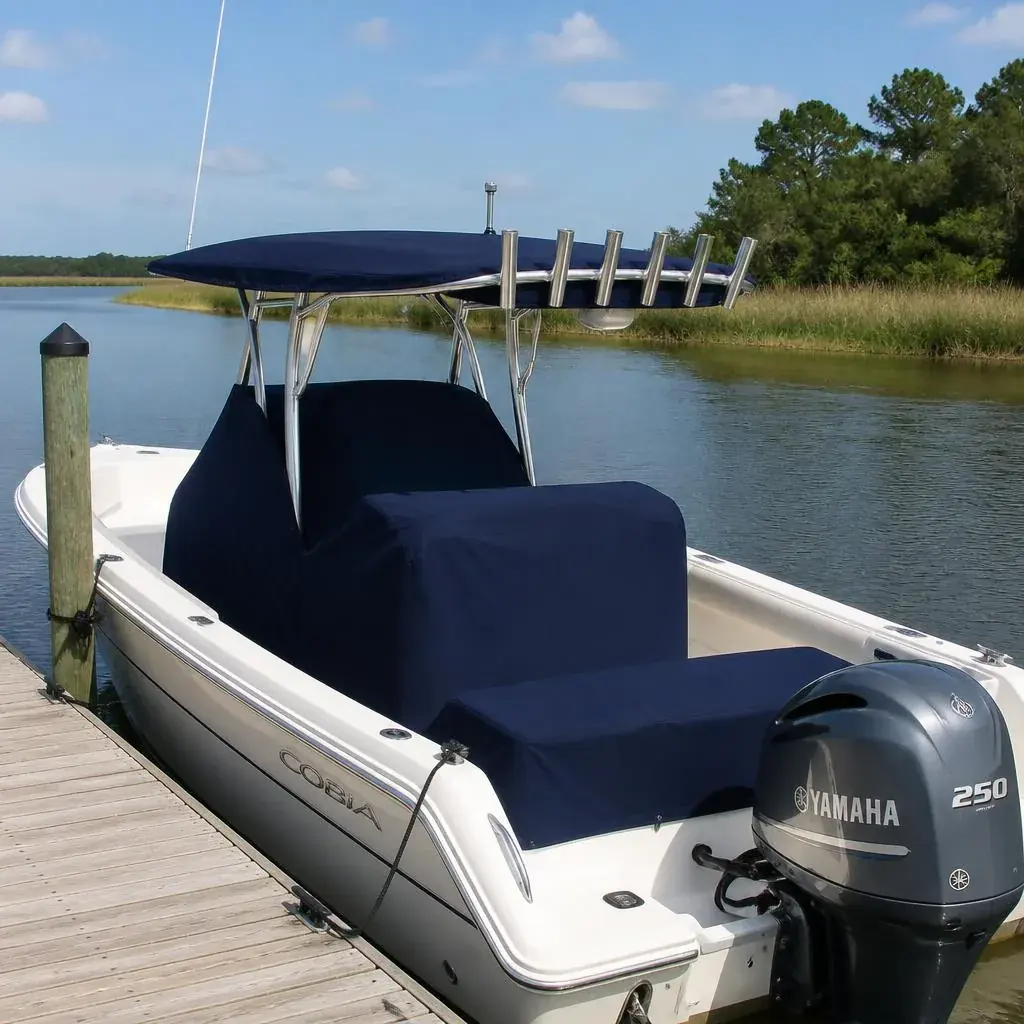
Sun, salt, and standing water are what actually end a boat interior or cover’s life — not age. Here is how South Carolina boat owners keep marine upholstery, canvas, and covers in service longer, and how to tell a repair from a replacement.
Most restoration work we do starts with small, ignored problems — a split seam, a faded helm chair, or a cushion left damp. These habits protect vinyl, foam, and stitching from the issues that turn a minor fix into a full rebuild.
Most canvas we see fail early was never dirty-looking — it was salted, damp, and stored wet. Four habits do almost all the work.
A five-minute fresh-water rinse removes salt, sand, and fish slime before they grind into the weave. Pay attention to seams, zipper tracks, and where the cover contacts rub rails.
Cool water, a soft brush, and a mild marine canvas soap. No bleach, no detergents with optical brighteners, no pressure washer — each of those strips the factory finish and shortens the fabric's life.
Folding a damp cover is the fastest way to grow mildew. Let canvas air-dry completely on the boat or over a rail, then store loosely rolled in a ventilated space, never sealed in plastic.
When water soaks in instead of beading, the repellent has worn off. Clean, dry, then apply a canvas-specific water repellent evenly on a cool day and let it cure before the cover goes back on.
Brush off loose dirt, leaves, and pollen while the canvas is dry.
Hose the whole cover with cool fresh water, top and underside.
Wash in sections with a soft brush and a mild soap made for marine canvas — never bleach or a pressure washer.
Let soapy areas dwell a few minutes; treat mildew spots with a marine-safe mildew cleaner.
Rinse until the water runs clear — leftover soap attracts dirt and holds moisture.
Air-dry completely before folding, storing, or re-waterproofing.
Re-apply a canvas-specific water repellent once water stops beading.
A cover rarely fails all at once. Catching the first failure point usually costs a fraction of a new cover.
UV kills thread before it kills fabric, so a cover with sound panels and blown seams is a re-stitch, not a replacement. We re-sew with UV-stable marine thread and reinforce the stress points that gave out.
Corners, tie-down points, and anywhere the cover touches hardware wear first. New grommets, chafe patches, and reinforcement panels restore tension where the cover is pulling hardest.
Rinse zippers and lubricate the track; when a slider or coil finally fails, the zipper can be replaced without rebuilding the whole cover.
Small holes get patched and sealed. If a cover has shrunk or lost shape, we can re-pattern the affected panel so the fit is tight again — a loose cover pools water and tears itself apart.
When fabric tears next to a brand-new seam or feels stiff and chalky, the material is finished. That is the point to replace the cover rather than keep paying to repair it.
A marine canvas repair rebuilds the part of the cover that failed rather than the whole cover. Aqua Marine Customs re-sews open seams with UV-stable marine thread, sets new grommets, adds chafe patches at wear points, replaces broken zippers, and re-patterns any panel that has lost its shape. The rest of the sound fabric stays in service.
Aqua Marine Customs builds covers from marine-grade, solution-dyed acrylic canvas with UV-stable thread, marine hardware, and reinforced stress points. Solution-dyed fabric holds color because the pigment is in the fiber rather than on the surface, and UV-stable thread matters because stitching normally breaks down before the fabric does in South Carolina sun.
Wash the cover, rinse it until the water runs clear, and let it air-dry completely before it goes away for the season. Store it loosely rolled in a dry, ventilated space — never sealed in a plastic bin or bag, and never folded damp. Trapped moisture is what turns a sound cover into a mildew-stained one over winter.
Send photos of the cover or boat, the boat's make, model, and year, and a short description of what failed through the quote form or by phone. Repairs are quoted from the damage shown; new covers are patterned directly on the boat rather than from a universal kit, so the boat is scheduled in before fabrication begins.
Last reviewed: by Aqua Marine Customs LLC
Aqua Marine Customs LLC is a woman-owned South Carolina shop building custom marine covers, trailer guide pole covers, power pole covers, and full upholstery repair and restoration.